
In the early 90’s the city of Sarajevo was under attack, something I remember studying at high school. Farouk, our guide through Bosnia, is the same age and couldn’t go to high school as his home city of Sarajevo was under attack.
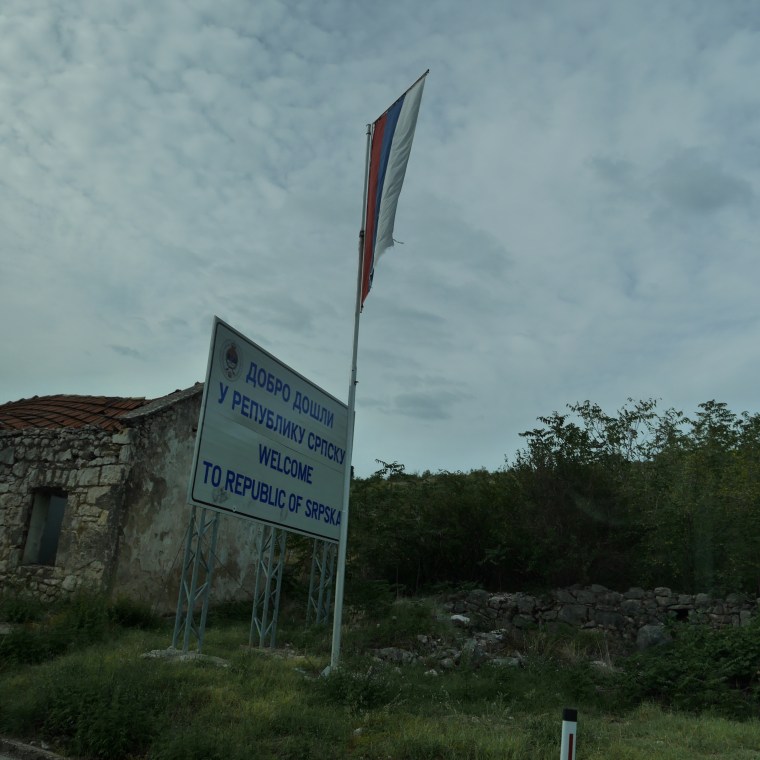
Evidence of the war is everywhere in Bosnia, from the shelled, but still standing, buildings, to the political nightmare that now required three of each position- one Bosnian Muslim, one Orthodox and one Catholic. There are also many areas of Bosnia that are still very much Serbian.
We joined Sarajevo Funky Tours for two tours – the first a day trip from Dubrovnik to Sarajevo, and the second an in-depth tour of Sarajevo – the Sarajevo Total Siege Tour. Our two guides were incredibly knowledgable and happy to share so many insights into their country’s past. I can’t recommend them enough!
Sadly it seems much of what we learnt at school about the Seige of Sarajevo (and was in the media at the time) was based on the misguided belief that this was a civil war between equal groups of locals, when in reality the Serbs were attacking a largely unarmed (at least in the beginning) civilian group of Muslim locals. And for a long time the rest of the world stood back and watched. In case you think I might have been unduly influenced by our guides, this has been backed up by many reports since with even the UN admitting they got it wrong at the time. Kofi Annan noted ‘the Serbs central aim was to create a geographically contiguous and ethically pure territory’.
Bosnia was a fascinating three days and I wish we had longer there to explore further.
Dubrovnik to Sarajevo
We were picked up early from our hotel by a local driver and taken across the border into Bosnia where we could meet our tour guide. Despite Croatia and Bosnia supposedly now getting along, Croatia still won’t let Bosnian guides pick up tour guests from inside Croatia!
Once with our guide we drove through the hills of Bosnia taking in small villages and vineyards.
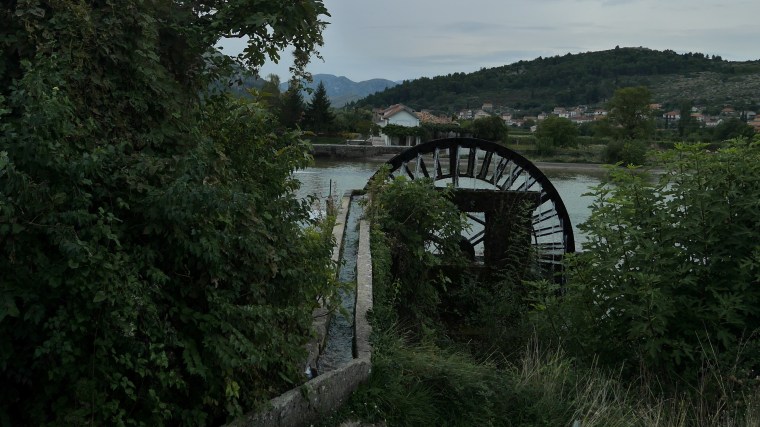
Farouk explained that many of these towns were destroyed by Serb soldiers who killed all that they found. Some managed to escape into the hills and made the long walk to Croatia for safety.
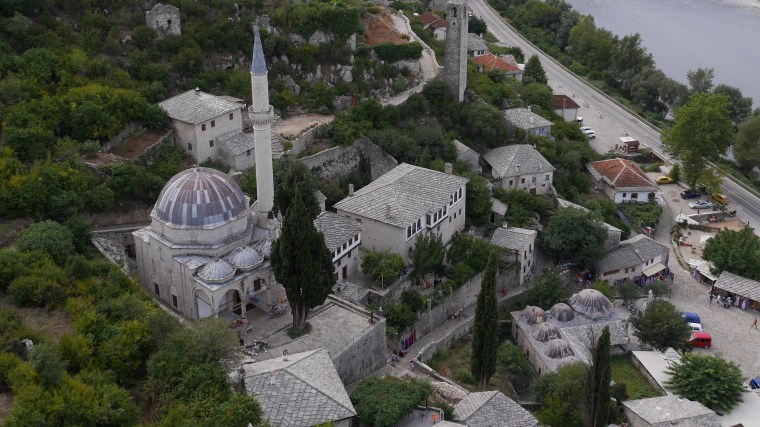
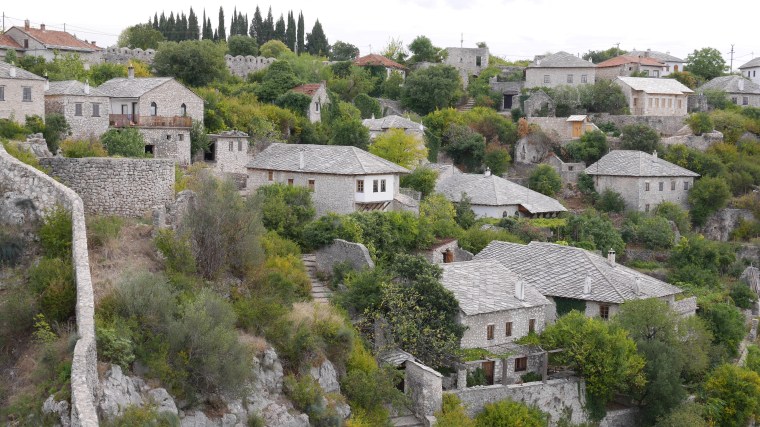
Our first stop was Positj a small village where we climbed up to an old fort for a beautiful view.
Next stop was Medjugorje the site of a supposed Catholic miracle. Frankly looked like a great opportunity to sell plastic religious icons mass produced in China. Not somewhere I would recommend!
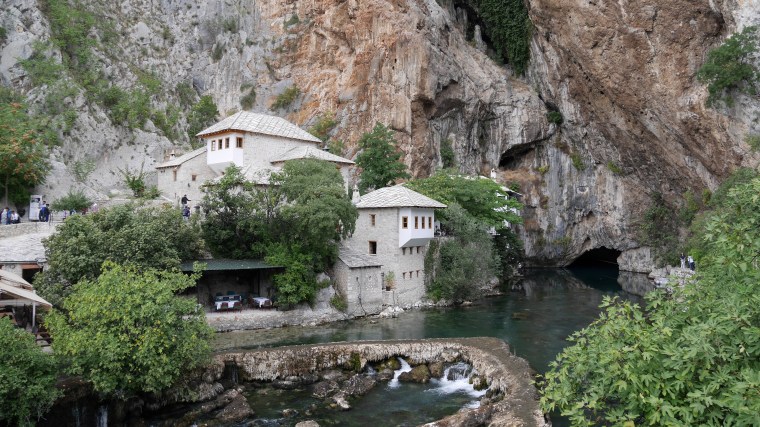
Then we were onto the source of the Buna river a relaxing spot complete with a whirling dervish house. We took a quick tour into a cave from which the river begins. The water is always 3C no matter how hot outside and despite many explorations into the cave by divers the source of the river has never been found.
Time for lunch. We were told the restaurant beside the cave was ‘the place’ for trout so we ordered some and a ‘simple’ meat platter. And this is what arrived. Just for 5 of us!!! Was amazing and one of many delicious meals in Bosnia.

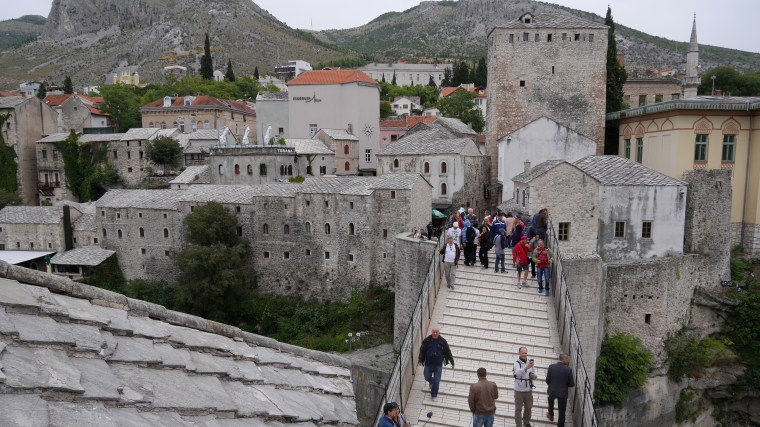
Our third stop was Mostar, the cutest town in Bosnia with a beautiful bridge. The bridge was destroyed when the Croats invaded and bombed the city. Thankfully the locals have rebuilt the bridge and there are experts (and crazy tourists) that jump off it regularly.
We entered a Mosque close by and climbed the many stairs up into the minaret to get the postcard-perfect shot of the bridge.
The bridge
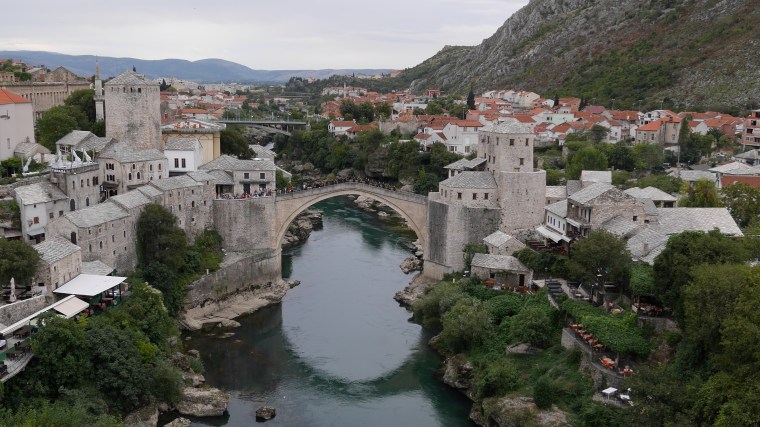
The minaret we climbed

Finally we made it to Sarajevo after a few hours driving through the countryside. Although raining we took a quick walking tour through the city, seeing where Franz Ferdinand was shot (starting WWI), many churches and the market area. Thankfully we had another day to explore the city!
Sarajevo
This morning we joined Sarajevo Funky Tours again for a war tour of the city. Our guide Skender (also the owner of the company) talked from the minute we met him, with a fascinating overview of the history and the war- including many stories of how the war had affected him, his family and friends. It’s incredible to look around the city and think that everyone my age or older went through this experience.
Map showing how surrounded Sarajevo was

We took off along ‘sniper alley’, so named as the Serbians were able to sit on the hills surrounding the city and clearly see (and shoot) the localsas they ran the gauntlet along this main street. Scary when you stand there and can see how close they were.
As we drove round the city Skender filled us in on how he war started and how much of a shock it was to the locals. The Serbs had passed off the amassing of tanks and soldiers as standard military training to protect the residents of Sarajevo, then turned on them with devastating consequences.
After an hour of fascinating history, we arrived at the entry to the Sarajevo Tunnel, the lifeline of the locals during the siege. The tunnel ran from the centre of the city under the airport to the small area not controlled by the Serbs- for the first time allowing women, elderly and children to leave the city and vital food and weapon supplies to get in. Until the tunnel was completed the locals had had to run across the runway- risking their lives as they were in clear sight of the Serbs.
The tunnel entrance is in a pock-marked house accompanied by a small museum which gives a sense of what life was like during the siege.

You can also take a short walk through a section of the tunnel.

After that we headed up to the hills where the Serbs attacked from – scary to see how close they got to the city, and how clearly you can see people going about their business on the streets below.

A ‘tank hotel’ up on the hill
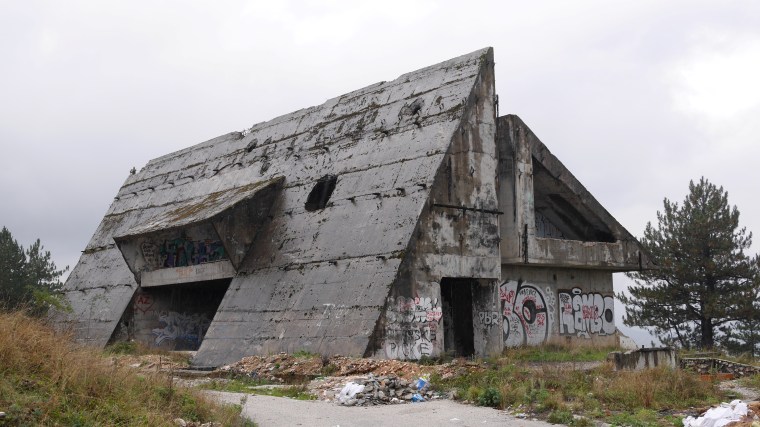
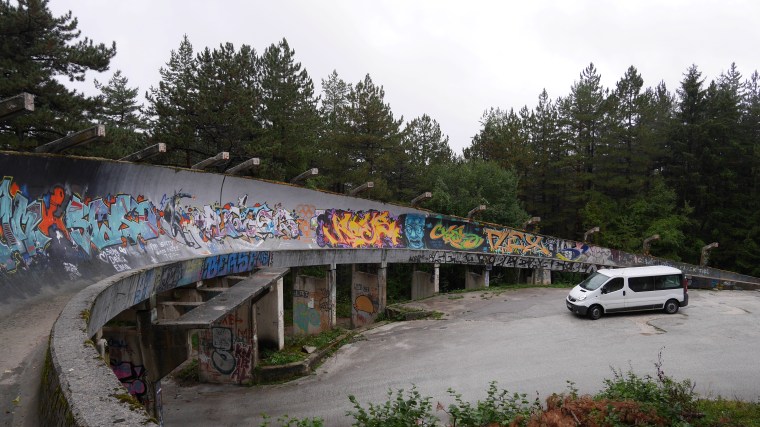
Prior to the war, Sarajevo had been the host of the Winter Olympics and many of the structures from these are still visible. As a break from the war stories we walked along the old luge track in the woods.
 Despite its recent history, Sarajevo is a thriving, fun city. We had a great night out at the many pubs and bars and there are fantastic markets and loads of cute restaurants. It’s also a lot cheaper than most places in Europe.
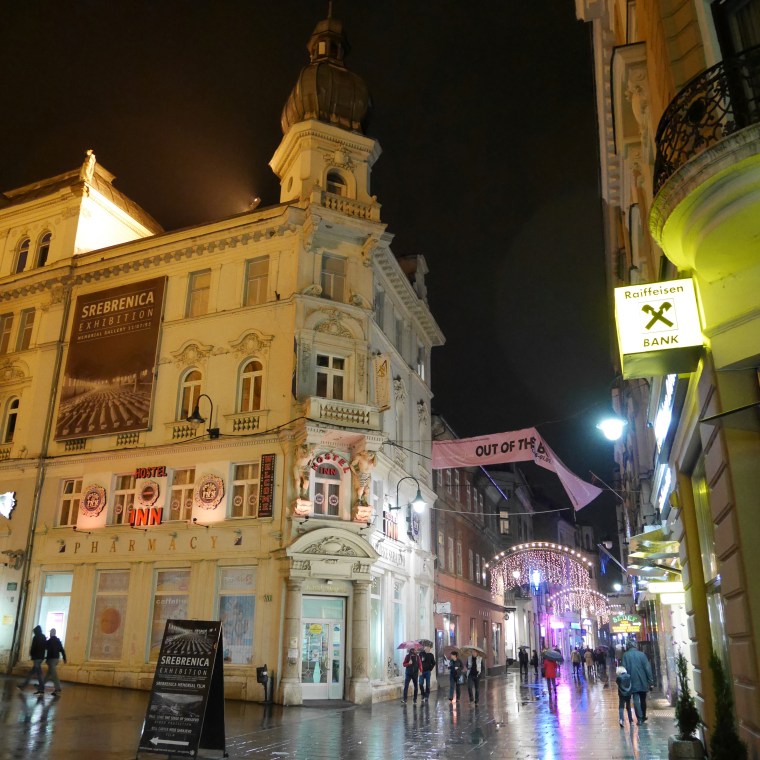
We made our own way back to Croatia taking the bus to Mostar for a night. Surrounding the Mostar bridge are loads of cute shops and restaurants and whilst we were there the tower on the bridge had an interesting photographic exhibition from the war.
Mostar bridge from above
Bosnia was such an interesting place and so different from what we had experienced elsewhere. Skender and the team at Sarajevo Funky Tours were amazing – they answered so many random questions from me promptly and were so friendly and accommodating. They even helped book our Sarajevo accommodation (which was brilliant). And their commentary and knowledge was what really made the trip special.
 But first let's travel
A fasinating place.
LikeLike